Enhancing Performance: 3D Laser Scanning in Connecticut
Connecticut 3D laser scanning market trends .Introduction
In the heart of New England, Connecticut has constantly been a center of development and technological improvement. As a designer operating in the state, I have experienced firsthand the transformative power of emerging technologies. Amongst these, 3D laser scanning has actually become a game-changer in numerous sectors, from construction and producing to historic preservation and beyond. Enable me to take you via my journey of finding and making use of 3D laser scanning in Connecticut, highlighting exactly how it has boosted efficiency throughout various industries.

My Initial Experience with 3D Laser Scanning
My preliminary experience with 3D laser scanning was both enchanting and enlightening. It was during a project at a historic site in Hartford where the requirement for accurate measurements was vital. The traditional methods were proving to be lengthy and vulnerable to human mistake. That’s when I was presented to a 3D laser scanning specialist from a regional firm.
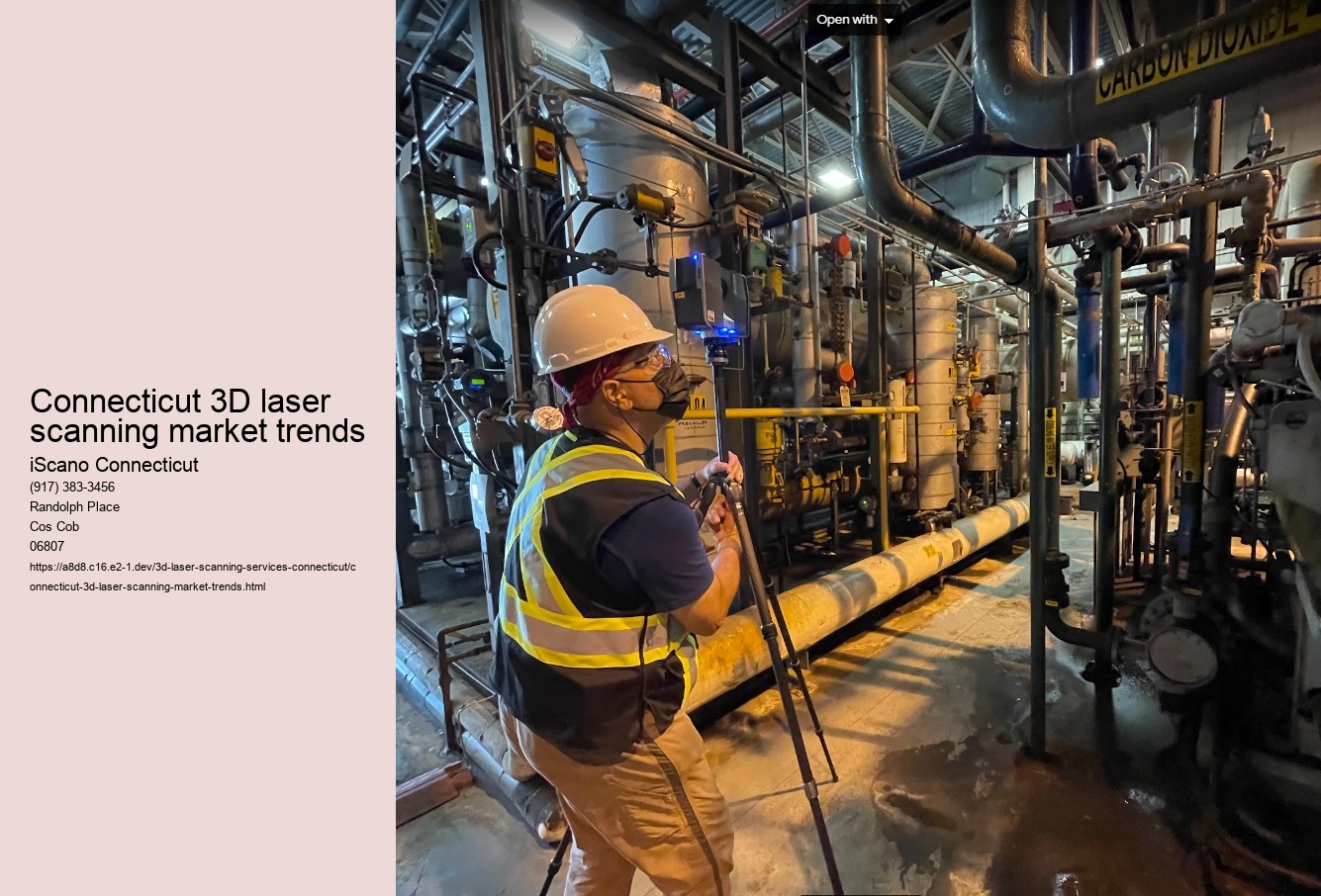
Enjoying the scanner at work was like observing a scene from a science fiction. The tool, installed on a tripod, sent out laser light beams that swept throughout the area, catching every min information. Within mins, we had a detailed 3D version of the whole space. This electronic reproduction permitted us to analyze and plan the restoration procedure with unmatched precision. The effectiveness and accuracy were past anything I had actually experienced before.
Accepting the Innovation in Construction
Influenced by this initial experience, I began checking out the broader applications of 3D laser scanning in my field. In Connecticut, where building and construction tasks range from contemporary high-rise buildings in Stamford to quaint colonial restorations in Mystic, the potential for this technology was tremendous.
Among the very first significant jobs where we carried out 3D laser scanning was an industrial advancement in New Sanctuary. The site had several challenges, consisting of limited gain access to and tight target dates. Standard checking methods would certainly have required several website check outs and substantial hands-on dimensions, which can have postponed the project significantly.
With 3D laser scanning, we were able to carry out a total website study in a solitary day. The scanner captured every element of the terrain, including topography, existing structures, and below ground utilities. The resulting 3D version provided our group with a detailed and exact structure for planning and design. We can essentially discover the website, recognize potential concerns, and make informed choices without the requirement for consistent physical examinations.
This effectiveness not only conserved us time however also minimized costs. By identifying and resolving possible troubles early in the style stage, we prevented costly rework and delays throughout building. The exact measurements likewise guaranteed that products were purchased properly, reducing waste and advertising sustainability.
Transforming Manufacturing Processes
As I dove much deeper right into the abilities of 3D laser scanning, I understood its possible to change making procedures. Connecticut has a rich background of production, from aerospace parts to medical tools. Accuracy is paramount in these sectors, and even the slightest variance can result in significant issues.
I had the chance to team up with a leading aerospace manufacturer in the state. They were dealing with difficulties with quality control and consistency in their assembly line. The conventional inspection approaches were labor-intensive and taxing, often causing manufacturing traffic jams.
Introducing 3D laser scanning to their quality control procedure was a game-changer. The scanner recorded detailed 3D designs of each part, permitting specific contrast with the initial layout specs. Any discrepancies were quickly determined, allowing swift restorative actions. This real-time responses loophole considerably boosted the uniformity and high quality of the manufactured parts.
In addition, the digital models worked as a valuable recommendation for future production runs, making certain that each batch met the rigid market criteria. The efficiency gains were substantial, with decreased evaluation times and enhanced throughput. The supplier reported significant cost savings and boosted client fulfillment due to the improved high quality and reliability of their items.
Preserving Connecticut’s Historical Heritage
Among one of the most rewarding elements of working with 3D laser scanning has been its application in maintaining Connecticut’s rich historic heritage. The state is home to countless historic sites, each with its special building and cultural value. Maintaining these structures calls for meticulous documentation and reconstruction initiatives.
I had the benefit of working with a reconstruction task at a historic mansion in Litchfield. The estate, integrated in the 18th century, had elaborate architectural information that were wearing away with time. Documenting these details precisely was crucial for the restoration procedure.
Making use of 3D laser scanning, we produced an exact digital reproduction of the mansion. Every cornice, molding, and ornamental component was captured in spectacular detail. This electronic design worked as a referral for the restoration team, making certain that the initial craftsmanship was preserved. The capability to picture the entire framework in 3D also permitted us to prepare the repair procedure a lot more efficiently, minimizing interruptions to the website.
Moreover, the electronic archive created through 3D laser scanning has lasting advantages. It serves as an irreversible document of the mansion’s initial state, which can be indispensable for future reconstruction efforts or for educational purposes. The technology has verified to be a crucial device in guarding Connecticut’s historic treasures for generations to come.
Conquering Obstacles and Welcoming the Future
While the benefits of 3D laser scanning are obvious, the trip has actually not lacked its challenges. Among the primary challenges has been the initial investment in the innovation. Premium 3D laser scanners and associated software can be pricey, presenting a barrier for smaller sized companies and organizations.
Nonetheless, as the modern technology comes to be more extensive, expenses are gradually lowering. Furthermore, the efficiency gains and expense savings understood through the use of 3D laser scanning usually validate the first investment. Several firms in Connecticut, consisting of ours, have actually discovered that the roi is significant, making it a worthwhile expense.
An additional obstacle has been the understanding curve related to operating the scanners and interpreting the data. This has called for a dedication to training and expert growth. In our company, we have bought training programs to make certain that our team excels in operation the technology and can take advantage of its complete capacity.

Aiming to the future, I am thrilled regarding the continued improvements in 3D laser scanning technology. Advancements such as portable scanners and drones equipped with laser scanning capabilities are making the modern technology a lot more easily accessible and functional. These improvements will certainly additionally boost performance and open up new possibilities across numerous markets.
Verdict
Reflecting on my journey with 3D laser scanning in Connecticut, I am struck by just how transformative this modern technology has been. From building and producing to historical preservation, its influence has actually been profound. The capability to capture and analyze precise 3D information has actually transformed the way we come close to tasks, leading to substantial efficiency gains and expense financial savings.
As Connecticut continues to embrace innovation and technical innovation, I am certain that 3D laser scanning will certainly play a significantly essential role. It is a powerful tool that not just improves efficiency but additionally helps us preserve our abundant background and construct a sustainable future. For anyone associated with markets where precision and efficiency are paramount, I extremely advise exploring the potential of 3D laser scanning. It has absolutely been a game-changer for me and my team, and I believe it can be for others also.
Below are the companies that are authority in the 3D Laser Scanning Technology
| Company Name | Business Description | Website Link |
|---|---|---|
| FARO Technologies | Provides 3D measurement, imaging, and realization solutions, including 3D laser scanning. | FARO |
| Trimble Inc. | Specializes in geospatial, construction, agriculture, and transportation solutions, including 3D laser scanning. | Trimble |
| Leica Geosystems | Offers a wide range of products and services for surveying and 3D laser scanning. | Leica Geosystems |
| Hexagon AB | Provides enterprise software and 3D laser scanning solutions for various industries. | Hexagon |
| Topcon Positioning Systems | Develops precise positioning products and solutions, including 3D laser scanners. | Topcon |
| RIEGL Laser Measurement Systems | Specializes in the research, development, and production of 3D laser scanners and systems. | RIEGL |
| Zoller + Fröhlich (Z+F) | Produces high-quality 3D laser scanners and offers software solutions for data processing. | Z+F |
| Surphaser | Manufactures 3D laser scanning systems known for their accuracy and reliability. | Surphaser |
| Creaform | Provides innovative 3D measurement technologies, including 3D scanners and software. | Creaform |
| Artec 3D | Develops and manufactures professional 3D scanners and software for various applications. | Artec 3D |

